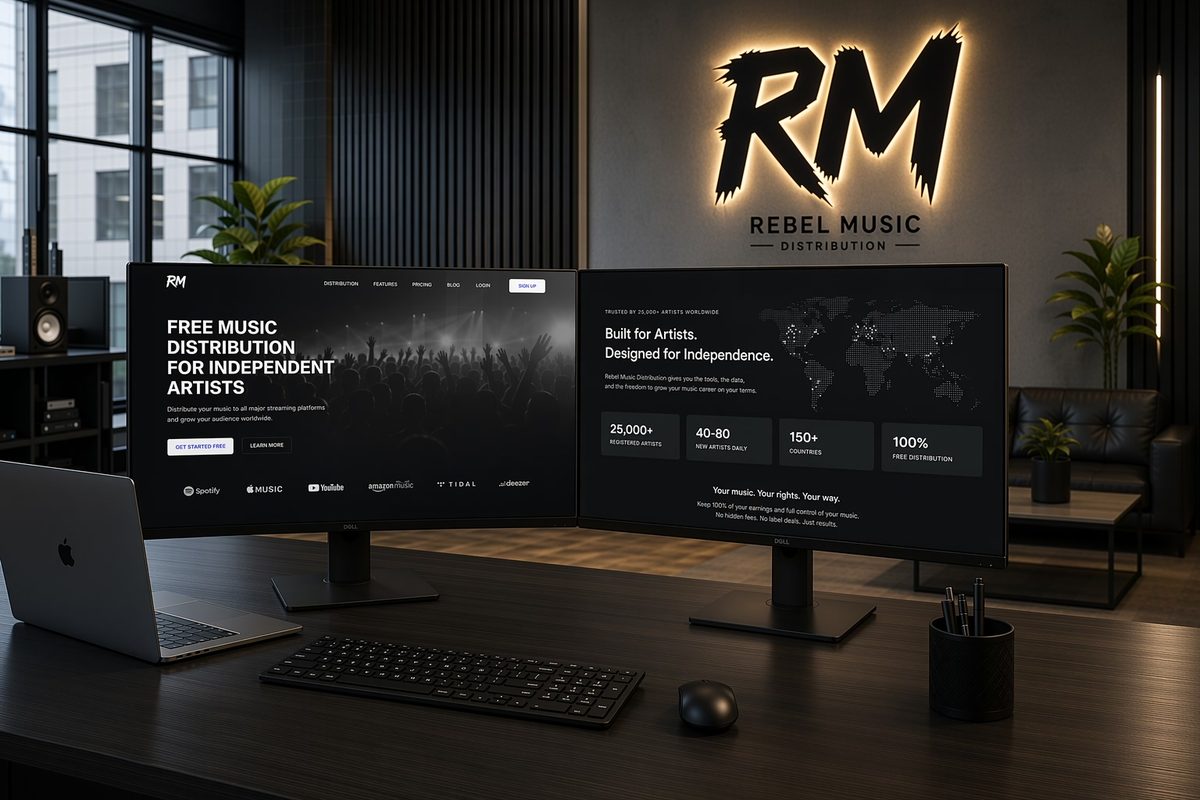
A guest post by Bojana Pavlović of Rebel Music Distribution: a practical guide to release preparation, rights, metadata, platform mapping and choosing a distribution model.
Music distribution has become much more accessible to independent artists, but easier access does not mean the process is automatic. Uploading a WAV file and artwork is only one part of getting a release onto Spotify, Apple Music, YouTube Music, Amazon Music, Deezer and other platforms. The decisions made before delivery can affect whether a release is approved, mapped to the right artist profile and credited correctly.
For artists releasing music without a label team, the most useful approach is to treat distribution as part of the production and release workflow rather than as the final administrative step. A little preparation before upload can prevent many of the problems that are difficult to fix after a track goes live.
1. Understand the distribution model before you commit
Distributors do not all operate in the same way. Some charge an annual subscription, some charge per release, some take a percentage of royalties, and others combine free distribution with paid optional services. None of these models is automatically right or wrong; the important question is what happens to your catalog, your royalties and your access to support over time.
Before choosing a service, check whether releases remain live if you stop paying, whether there are withdrawal thresholds, which stores are included, how royalty splits work, whether Content ID or other rights-management services cost extra, and how easy it is to move a catalog later. Artists comparing different models may find it useful to review music distribution alternatives for independent artists before committing a large catalog to one provider.
2. Prepare the final master before opening the dashboard
The safest workflow is to complete the production and mastering first, then choose one definitive master for distribution. Uploading while the mix is still changing often creates multiple versions with similar filenames and makes it easy to deliver the wrong file.
Use a high-quality lossless master, normally a stereo WAV file, and check the beginning and end of the track, fades, accidental silence, clipping and unexpected count-ins. Listen once outside the studio as well. A phone, headphones or car system can reveal a problem that was missed during production.
3. Metadata is part of the release, not paperwork
Artist names, track titles, featured artists, composers, lyricists, producers, copyright information and release dates should be prepared before submission. Metadata entered casually during upload is one of the most common sources of avoidable corrections.
Consistency matters. A small spelling difference can create duplicate artist profiles or send a release to the wrong existing profile. The same artist name should be used consistently across streaming services, social profiles, artwork and future releases.
4. Artist mapping deserves attention before release day
Two artists can have the same name, and digital platforms do not always know which profile belongs to which person. If the distributor allows existing Spotify, Apple Music or YouTube profiles to be selected during submission, use the correct artist links or identifiers whenever possible.
When a release goes live, check the major platforms immediately. If it appears on another artist's page, report the mapping issue early. Corrections are usually easier when there is only one affected release than after several releases have been delivered to the wrong profile.
5. Rights should be clear before delivery
A finished recording can still be unready for distribution if the underlying rights are unclear. Samples, cover songs, remixes, purchased beats, third-party vocals, collaborative recordings and some AI-assisted material can introduce additional rights questions.
Know who owns the master, who wrote the composition and lyrics, and whether any third-party material requires permission. If a release depends on a license or rights-transfer agreement, keep the documentation. In a copyright dispute, a clear written agreement is far more useful than a message saying that permission was given informally.
6. Do not treat credits as optional
Credits are increasingly important as platforms improve songwriter and contributor information. A vocalist may perform under an artist name while stores still require a legal songwriter or composer name in specific fields. Instrumental and vocal tracks may also require different contributor information.
The best time to resolve these questions is before submission. Correcting credits after a release has already been distributed can take longer and may require updates across several services.
7. Artwork must match the metadata
Cover art is creative, but it is also part of the release data. The artist and title shown on the artwork should not contradict what is entered in the distributor dashboard. Promotional text, web addresses, social handles, store logos and misleading claims can also create review problems on some platforms.
Use clean artwork at the required resolution and keep the visual identity consistent with the artist. A strong cover can still be simple; it does not need to contain every piece of information about the release.
8. Give yourself time for quality control
Independent artists often want to release as soon as a master is finished. That is understandable, but a very short lead time leaves no room for metadata corrections, artist-profile issues, rights checks, pitching or promotional preparation.
Scheduling a release in advance gives both the artist and distributor time to solve problems before the planned date. For artists with a regular release schedule, uploading several releases ahead of time can be useful as long as each one has complete and accurate information.
9. Be careful with generic and promotional metadata
Digital platforms increasingly review not only audio quality but also how releases are presented. Artist names, featured-artist fields and titles should describe the music and contributors accurately rather than being used as search-engine keywords or promotional space.
Metadata that looks designed primarily to capture searches, imitate popular playlists or create artificial visibility can lead to additional review. The safest approach is straightforward: use authentic artist identities, accurate titles and credits, and let promotion happen outside the metadata fields.
10. Keep your own release archive
Do not rely on a distributor dashboard as the only record of your catalog. Keep your own folder for every release with the final master, cover art, complete metadata, ISRC and UPC/EAN information, contributor details, rights documents, release date and live platform links.
This becomes especially valuable when a catalog grows. If you later change distributors, investigate a copyright issue or need to correct metadata, having an organized archive can save hours of work.
11. Distribution is only the beginning
A distributor can deliver music to platforms, but availability is not the same as discovery. Artists still need a reason for listeners to care: an audience, consistent communication, live activity, playlists, press, social content or a community built around the music.
That is why distribution works best when it is part of a broader release plan. The technical goal is to make sure the music reaches the correct platforms with the correct information. The artistic and marketing goal begins after that: getting real people to listen and return.
A good release workflow reduces problems later
Music distribution in 2026 is not difficult because the upload process is complicated. It is difficult because a release contains many small pieces of information that have to agree with one another: the audio, artist identity, rights, credits, artwork, platform profiles and release timing.
Artists who build a repeatable checklist around those elements usually spend less time fixing avoidable problems after release. The goal is not to make distribution bureaucratic. It is to make the administrative side predictable enough that the artist can return to the work that matters most: making and releasing music.
Bojana Pavlović is the General Manager of Rebel Music Distribution, an independent music distribution platform based in Italy.